
DO I HAVE PATULOUS EUSTACHIAN TUBE?
Patulous Eustachian Tube Dysfunction (pETD) can make your own voice or breathing sound unusually loud inside your ear. These symptoms can be distressing, but they do not confirm PET on their own. An ear, nose and throat (ENT) clinician can assess your symptoms and rule out other causes.
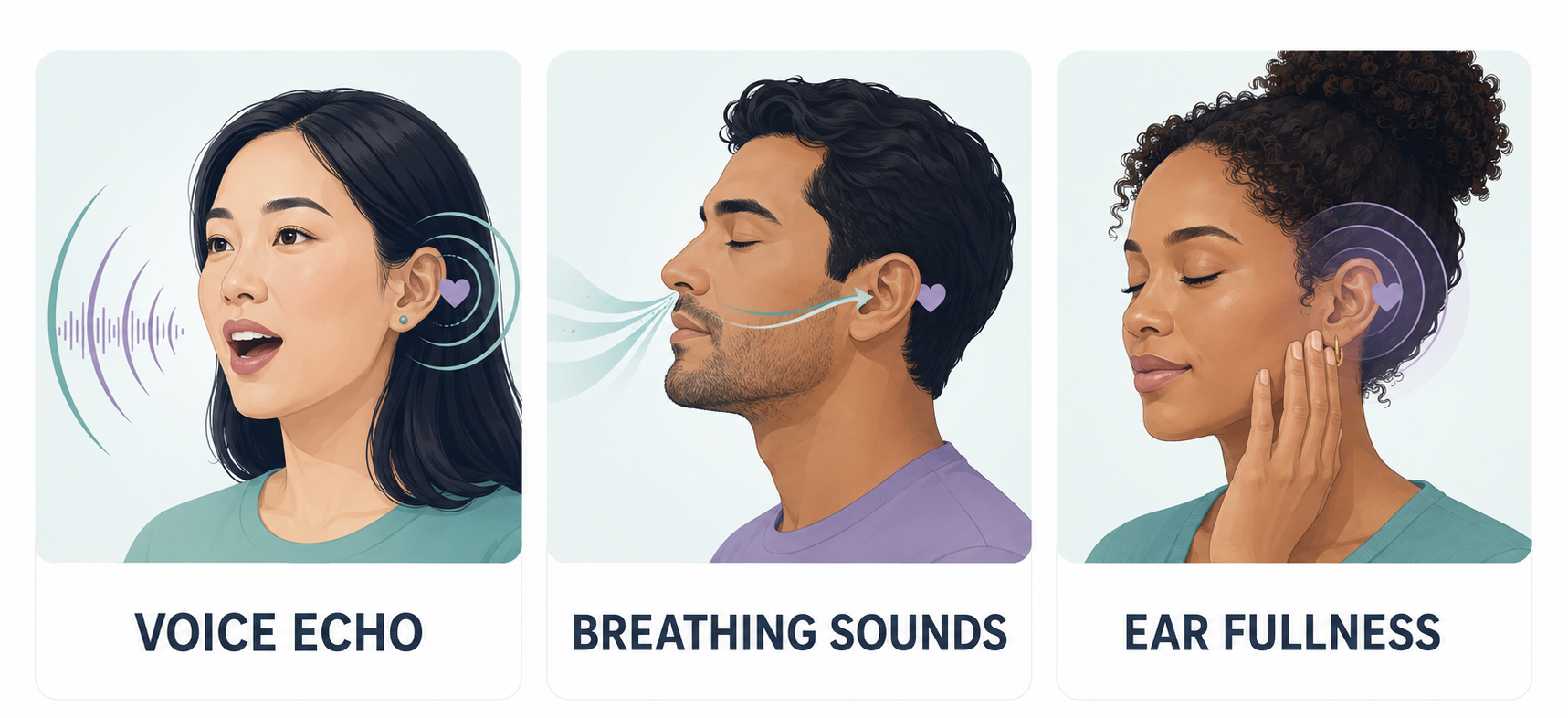
Common signs of PET
Autophony: your voice echoes, booms, or sounds as though you are speaking inside a barrel or bucket.
Breathing autophony: you hear your breathing loudly in the affected ear.
Ear fullness or pressure, even though the Eustachian tube is open rather than blocked.
In some people, the eardrum moves in time with breathing.
Why does my ear feel full if there is no fluid build up?
A normally functioning middle ear often sits at a slightly negative pressure relative to the outside environment. This occurs because gases in the middle-ear space are gradually absorbed into the bloodstream through the middle-ear mucosa. This gas absorption creates a natural vacuum effect in the middle ear.
With PET, the Eustachian tube remains open, and the middle ear can no longer maintain the optimal stable resting environment of negative pressure. The brain interprets these unfamiliar signals as a sense of pressure often resulting in a description of being “blocked”, “plugged” or “full”. However, this sensation does not necessarily mean that fluid has collected or that pressure is building behind the eardrum. Instead, the sensation of fullness may be the brain’s response to an abnormal pattern of sound, movement and pressure transmission within the middle ear.
Due to this feeling of “fullness”, PET is very often misdiagnosed as Obstructive Eustachian Tube Disorder, and therefore the patient is treated for a blocked Eustachian tube, rather than an open one. Treatments for ETD and PET have the opposite goal: the goal of ETD treatment is to open the Eustachian tube while the treatment goal for PET is to close the tube.
What Is a Patulous Eustachian Tube?
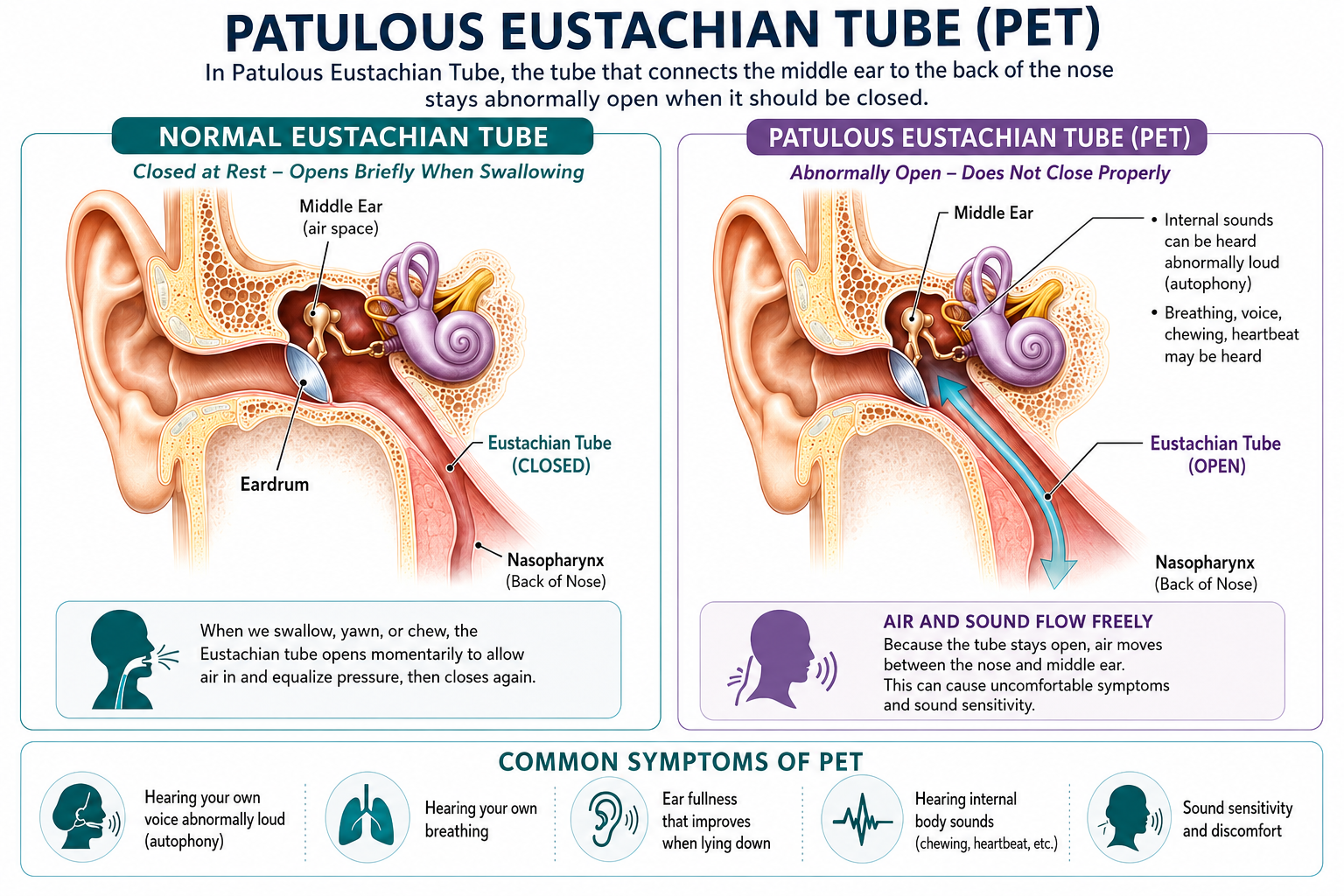
Patulous Eustachian Tube, often called PET, is a condition where the Eustachian tube stays too open when it should normally remain closed. Each ear has a Eustachian tube that connects the middle ear to the space behind the nose. In a healthy ear, this tube usually stays closed and opens briefly when we swallow, yawn, or chew to help balance pressure and drain fluid.
When the Eustachian tube remains abnormally open, sounds from inside the body can travel into the middle ear in a way that feels overwhelming, intrusive, and difficult to explain. For many patients, PET is not simply “ear pressure.” It can feel like living inside an echo chamber, where the body becomes too loud and quiet moments are no longer quiet.
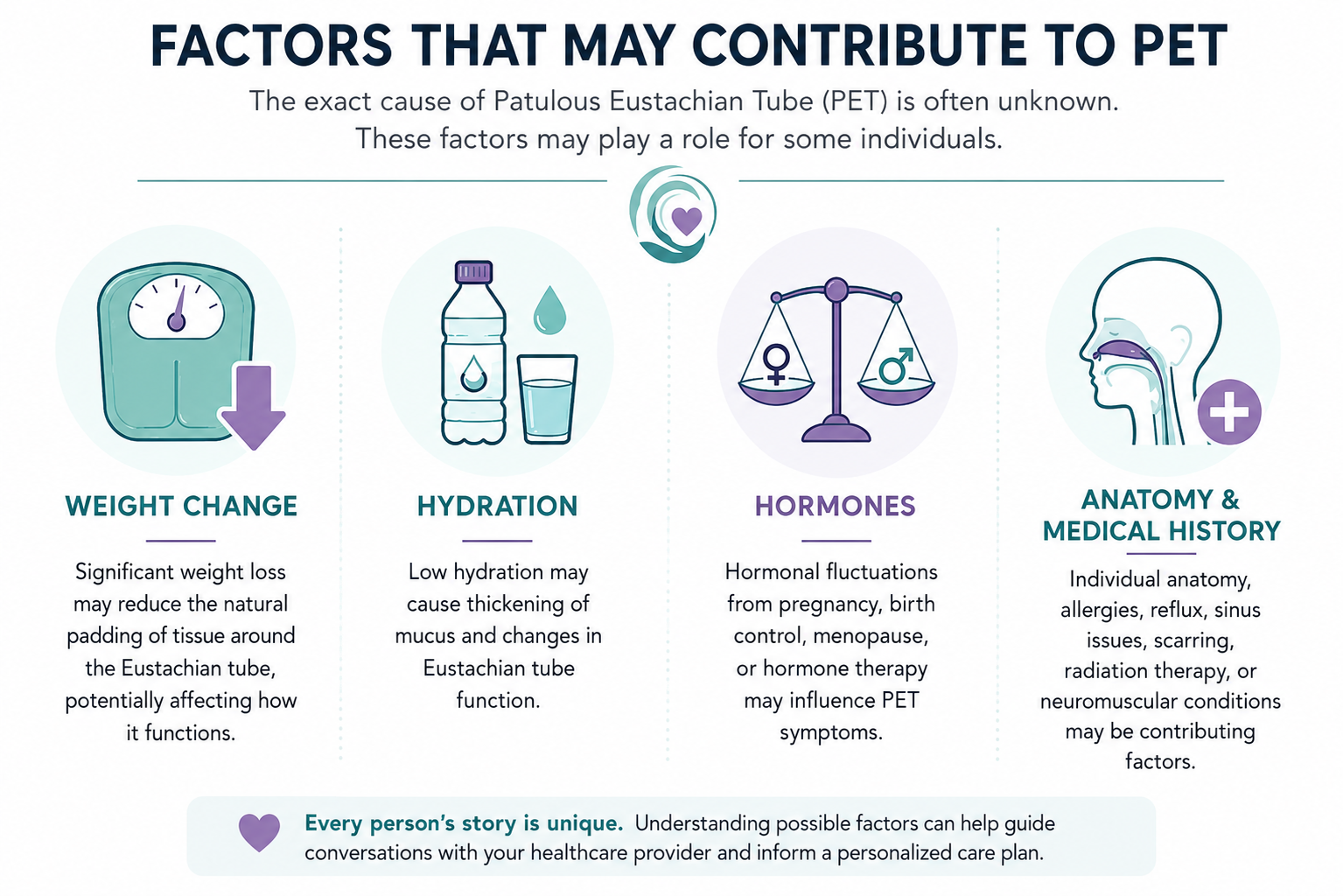
What Can Cause or Contribute to pETD?
In many cases, the exact cause of PET is unknown. Medical sources note that PET may be associated with weight loss, hormonal changes such as pregnancy or hormone therapy, allergies, reflux, radiation therapy, scarring near the Eustachian tube, and certain neuromuscular conditions.
Because causes and triggers can vary from patient to patient, PET requires careful evaluation. A person’s story matters. When symptoms happen, what makes them better or worse, whether lying down helps, whether exercise worsens symptoms, and whether breathing sounds are present can all help guide the conversation with an ear specialist.
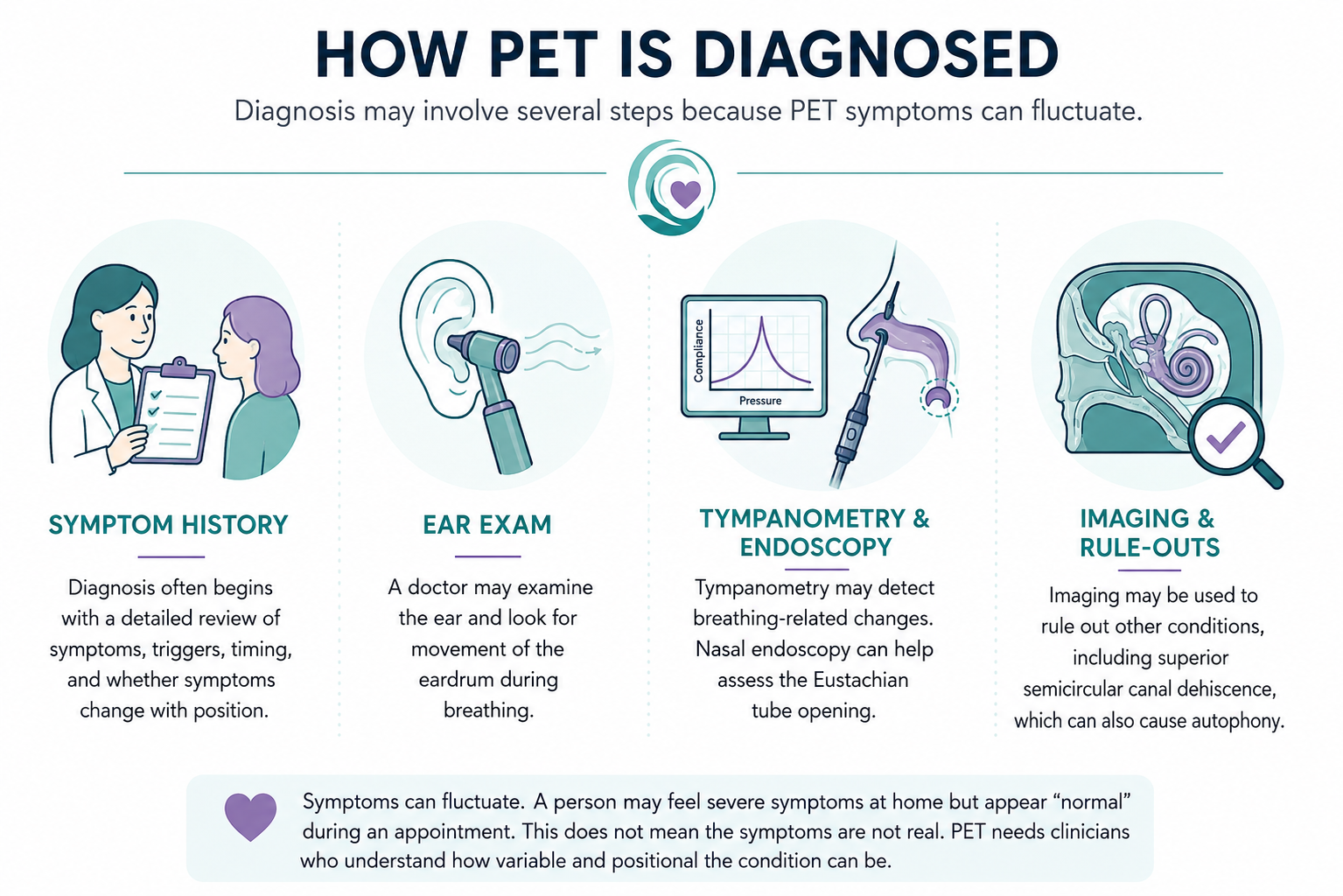
How PET Is Diagnosed
Diagnosis often begins with a detailed symptom history and an ear exam. Doctors may look for movement of the eardrum during breathing, perform tympanometry to measure pressure-related changes, or use nasal endoscopy to view the Eustachian tube opening. In some cases, imaging may be used to rule out other conditions, such as superior semicircular canal dehiscence, which can also cause autophony.
PET can be difficult to diagnose because symptoms may fluctuate. A patient may feel severe symptoms at home, then appear “normal” during an appointment. This does not mean the symptoms are not real. It means PET needs clinicians who understand how variable and positional this condition can be.
What is happening in the ear?
The pathology of PET is actually quite simple:
The Eustachian tube connects the middle ear to the back of the nose. It is normally closed and briefly opens when you swallow or yawn to equalize pressure. With PET, the tube does not close properly at rest. This open pathway can carry the sound and pressure of your voice and breathing to the middle ear.
How PET is assessed?
An ENT clinician may ask when your symptoms occur, examine your eardrum while you breathe, and look at the Eustachian tube opening with a nasal endoscope. Other hearing or pressure tests may be used to support the diagnosis and exclude other conditions.
If you already have a clear video showing your eardrum moving with normal breathing, you can share it at your appointment. Do not force pressure into your ears or rely on a home device to diagnose yourself.